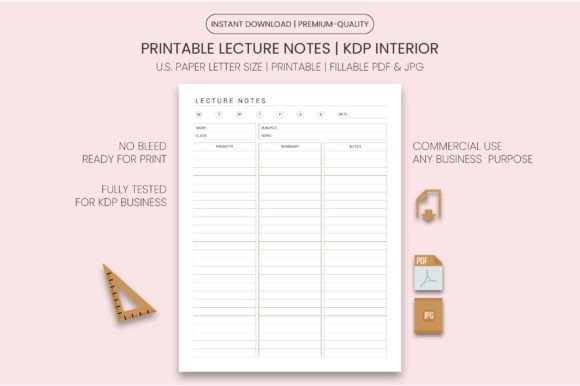
Printable Lecture Notes: Your Gateway to Organized Knowledge and Business Potential
In the digital age, the act of writing, structuring, and sharing information remains a cornerstone of learning and business. For students, educators, content creators, and entrepreneurs, the tools we use to capture and disseminate knowledge are vital. Among these tools, a specialized resource has emerged as a powerful ally: Printable Lecture Notes. This article delves into the world of these versatile templates, exploring their purpose, features, and the significant role they play in personal organization, education, and commercial ventures like Amazon's Kindle Direct Publishing (KDP).
What Are Printable Lecture Notes?
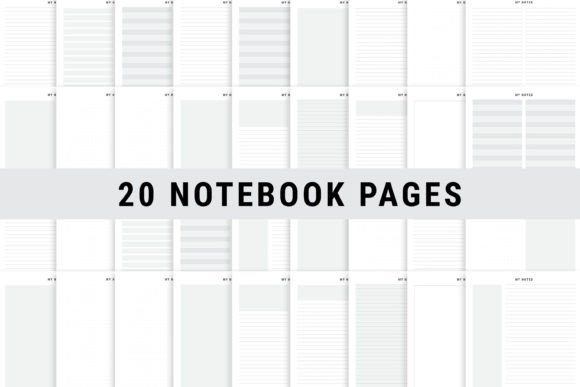
At their core, Printable Lecture Notes are pre-designed digital templates. They are structured layouts intended to be filled with information—lecture content, study notes, meeting minutes, or creative ideas—and then printed out or used digitally. Unlike a blank page, they provide a framework that guides organization, ensuring consistency and clarity. The key term here is printable. They are not physical products shipped to you; they are digital files you download. This means you have complete control: you can print them at home, at a local print shop, use them on a tablet, or edit them to suit your exact needs before printing.
Their significance lies in bridging the gap between digital convenience and physical utility. While apps and software are excellent for on-the-go note-taking, many people find that physical notes enhance memory retention, reduce digital distraction, and provide a tangible record. Printable Lecture Notes templates cater to this need by offering a high-quality, ready-to-use structure that you can bring into the physical world whenever you choose.
Unpacking the Features: A Toolkit for Every Need
The true value of these products is unlocked through their specific features. Let's examine the common attributes mentioned, such as "Practical size – 8.5 x 11 inch, No bleed, Digital download," and understand what they mean for you.
The Practical Foundation: Format and Specifications
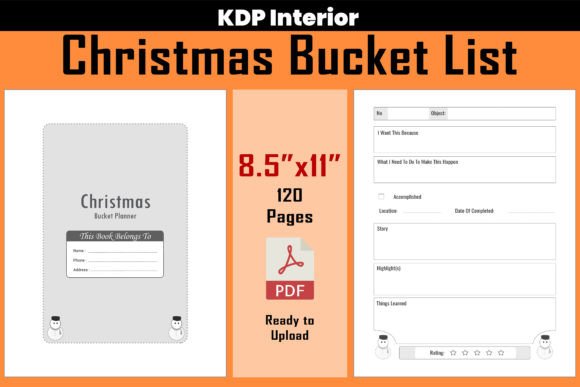
The standard 8.5 x 11 inch size is the US letter format, a universal size for home and office printers. This "practical size" ensures effortless printing without requiring special paper or printer settings. The mention of No bleed is a crucial technical detail. "Bleed" refers to design elements that extend beyond the edge of the page, necessary for books where color runs to the very edge. Lecture notes typically do not require this, as the content is safely within margins. A "no bleed" design is simpler, more printer-friendly, and cost-effective.
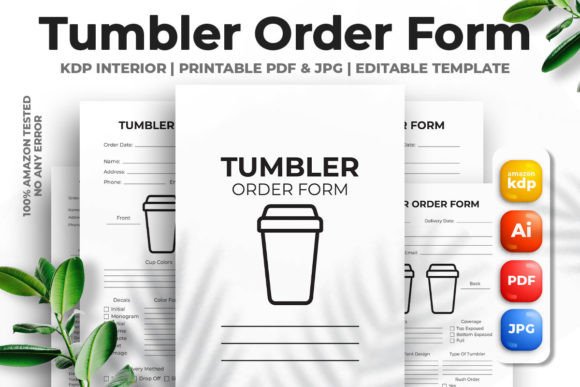
Digital download is the delivery method. You receive a set of files instantly after purchase. This bundle often includes multiple formats to maximize usability:
- Editable Source File (Ai): An Adobe Illustrator file for advanced users who wish to customize every element (colors, fonts, layout) professionally.
- PDF: The universal, ready-to-print format. You can type into it using various software or simply print it blank to handwrite.
- JPG/PNG: Image files useful for inserting pages into other documents, presentations, or for digital use on platforms that accept images.
- PPTX: A PowerPoint file, allowing easy editing and customization within a familiar presentation software environment.
The assurance of High quality print and DPI 300 ppi dpi guarantees the resolution. DPI (dots per inch) or PPI (pixels per inch) at 300 is the standard for excellent print quality, ensuring crisp text and sharp lines without blurriness.
The Business-Ready Package: KDP and Commercial Use
A standout feature is being Ready to print for your local business and including a 109 pages PDF ready for upload to KDP. This transforms the product from a personal tool into a commercial asset. For a local tutoring center, workshop organizer, or small educational business, you can print these notes professionally and provide them as physical materials to clients or students.
For the KDP ecosystem, this is particularly significant. Kindle Direct Publishing allows individuals to self-publish books and sell them globally on Amazon. A 109-page PDF formatted correctly (no bleed, correct size) is essentially a ready-made interior for a notebook or lecture workbook. You can upload this PDF directly to KDP, set your price, and publish a physical notebook without needing graphic design skills. The template provider often includes commercial licensing, meaning you can use the design to create and sell your own products.
The Purpose and Practical Relevance: Where Do They Fit?
Printable Lecture Notes templates serve multiple roles across different spheres of modern life.
In Education and Personal Learning
For students, these templates combat disorganized note-taking. A structured layout with sections for date, topic, key points, summaries, and questions prompts more effective learning. It encourages active listening and review. For educators and professors, they provide a consistent format for distributing lecture outlines or study guides to students, enhancing the professionalism of their course materials.
In Creativity and Daily Organization
Beyond academia, the structure is invaluable. Writers can use them for chapter outlines. Project managers can adapt them for meeting agendas and minutes. Content creators can sketch video scripts or blog post structures. The act of printing and having a physical sheet often sparks creativity and focus differently than a scrolling screen.
In Business and Technology
Here, the commercial application shines. The digital download model is a product of modern e-commerce and digital goods technology. It represents a low-overhead business idea for designers (selling the templates) and for entrepreneurs (using them to create sellable products). It fits perfectly into the "create once, sell many times" digital product model. For KDP entrepreneurs, it drastically reduces the barrier to entering the physical notebook market, a popular and evergreen niche on Amazon.
Clarifying Common Misunderstandings
Several assumptions about such products are worth addressing:
- Misunderstanding 1: "It's just a PDF of blank pages." It is far more. It's a designed template with intentional layout, typography, and functional elements like headers, section dividers, and page numbers that a blank document lacks.
- Misunderstanding 2: "I can't edit it if I'm not a designer." The inclusion of multiple formats (PDF, PPTX) means you can edit text easily in software you already know, like Acrobat Reader or PowerPoint, without touching complex design elements.
- Misunderstanding 3: "Commercial use means I can resell the digital file itself." Typically, commercial use licenses allow you to use the template within your products (e.g., a printed notebook you sell). It usually does not permit you to resell the original digital template file as your own product. Always check the specific license.
Building a Broader Understanding: The Ecosystem of Printable Templates
Printable Lecture Notes are part of a larger ecosystem of digital printable products that empower individuals. This includes planners, journals, workout logs, and business forms. They all share the same principles: providing structure, saving time, and enabling both personal use and commercial opportunity. They reflect a shift towards user empowerment in design and publishing. With these tools, a teacher can be a publisher, a student can be a meticulous archiver of knowledge, and an entrepreneur with no design background can launch a professional product line.
Their relevance is tied to the enduring human need for organization and tangible artifacts. Technology hasn't eliminated paper; it has evolved how we prepare and use it. These templates are the perfect synthesis—born from digital design tools, distributed through global online platforms, and realized in the physical world according to the user's immediate needs.
Examples in Action
Imagine a graduate student preparing for finals. They download a lecture notes template. Each day, they print a few pages, take notes during their review sessions, and compile a sturdy, organized binder of revision materials. The consistent layout makes searching for information quick.
Now imagine a small business owner running workshops. They purchase a commercial-use template, print 50 copies at a local print shop on quality paper, and provide them as part of their workshop package, adding tangible value and a professional touch.
Finally, consider an KDP seller. They find a 109-page lecture notes PDF. They upload it, set a title like "University Lecture Notebook: 109 Pages of Organized Note-Taking," and publish. Within days, their physical notebook is available for sale worldwide, with no inventory risk, as Amazon handles print-on-demand.
Conclusion: More Than Just a Template
Printable Lecture Notes, therefore, are more than just a digital file. They are a tool for efficiency, a framework for learning, and a gateway for business. They embody the flexibility demanded by modern life, where roles blur—the student is also a content creator, the teacher is also an entrepreneur. By understanding their features, like the practical 8.5x11 size, the multi-format download pack, and the KDP-ready PDF, you can harness them not only to organize your thoughts but also to structure your projects and potentially, to build your business. In a world overflowing with information, having the right structure to capture it is the first step toward mastery and innovation.