The Practical Guide to the 2023 Daily Diary with Weekly Planner: A Comparison for Creators
When searching for planner interiors to use in a self-publishing venture, you encounter a spectrum of options. One prominent offering is the 2023 Daily Diary with Weekly Planner interior template. Understanding its distinct characteristics, format, and intended use case is crucial for determining if it aligns with your project goals and publishing strategy. This analysis examines its structure, compares it to common alternatives in the market, and explores the tradeoffs involved to help you make an informed decision.
What Distinguishes This Planner Interior Template
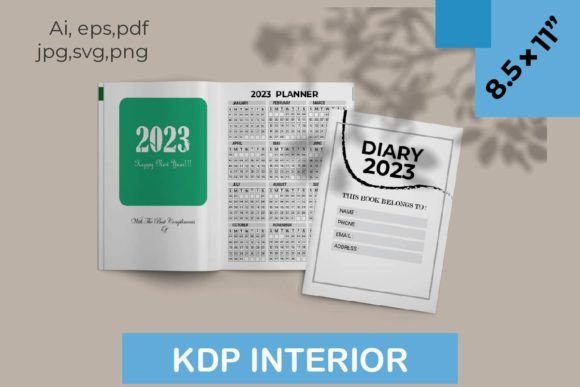
The 2023 Daily Diary with Weekly Planner is fundamentally a pre-designed, print-ready book interior. Its core distinction lies in its combination of daily diary pages with integrated weekly planning overviews, all formatted for a specific trim size (8.5" x 11") without bleed. This means the content is designed to fit exactly within the page boundaries, a critical requirement for print-on-demand platforms like Amazon KDP. Another defining feature is the provision of multiple file variants—typically AI, EPS, PDF, PNG, JPG, and SVG. This suite caters to different user needs: the vector files (AI, EPS, SVG) allow for customization in design software, while the raster images (PNG, JPG) and ready-to-print PDF offer flexibility for immediate use or integration into other projects.
This product is positioned as a tool for business success on KDP, implying its primary audience is creators looking to sell physical planner books rather than individuals seeking a single copy for personal use. The ready-for-upload status suggests it has undergone technical checks for KDP’s printing specifications, which can be a significant practical advantage for newcomers navigating the platform’s requirements.
Comparison with Common Alternative Formats and Styles
To evaluate the 2023 Daily Diary with Weekly Planner effectively, it's helpful to consider the broader categories of planner resources available.
Completely Custom Designs vs. Pre-Formatted Templates
One major alternative is designing a planner interior from scratch using software like Adobe InDesign or Canva. This approach offers total creative control over layout, aesthetics, and unique features. The tradeoff is immense time investment and the need for expertise in both design and print formatting. The 2023 Daily Diary with Weekly Planner template eliminates this hurdle, providing a tested foundation. However, it also imposes a fixed structure. If your vision includes unconventional page sequences, specialized tracking sections, or a radically different visual style, a pre-made template may feel restrictive.
Digital vs. Physical-First Planner Products
Another comparison axis lies in the end product's format. Many planners today are designed primarily for digital use (PDFs for tablet annotation, apps). The 2023 Daily Diary with Weekly Planner is explicitly "physical-first"—its design prioritizes ink-and-paper printing on a standard US letter size. This focus means considerations like font size for readability, spacing for handwriting, and the absence of interactive elements are central. If your target audience prefers digital planners, this specific interior would be a misaligned choice, despite its file variants. Those variants serve more as source files for modification rather than as final digital products.
All-in-One Systems vs. Modular Components
Some planner resources offer modular sections (like separate weekly spread packs, daily log inserts, or habit tracker templates) that creators can mix and match. The 2023 Daily Diary with Weekly Planner represents an all-in-one, consolidated system for a full year. This cohesion is a strength for producing a complete, bound book. However, it limits modularity. You cannot easily extract just the weekly layouts to combine with a different daily page style from another source without significant file editing work.
Evaluating Fit: Strengths and Potential Limitations
Identifying the best-fit situations for this product requires a realistic look at its inherent strengths and the limitations that might steer you toward another option.
Where This Template Often Excels
The primary strength of the 2023 Daily Diary with Weekly Planner is its role as a validated starting point. For an entrepreneur new to KDP, the assurance that the trim size and bleed settings are correct reduces a major technical risk. The inclusion of multiple file formats, particularly editable vector files, offers a middle path between a rigid template and a from-scratch design—it allows for color changes, font substitutions, or minor layout tweaks without rebuilding every page.
Its combined daily/weekly format caters to a popular user preference: the ability to detail daily events while maintaining a broader weekly overview. This dual functionality can make the final printed book feel comprehensive and useful for a wide range of customers, from students to professionals managing complex schedules. The ready-to-print PDF is a direct asset for rapid listing and launch if no customization is desired.
Considerations and Tradeoffs
The fixed page size (8.5" x 11") is a notable consideration. While common, it may not match your desired product vision. Smaller, more portable sizes (6" x 9", A5) are popular in the planner market. Choosing this template commits you to this larger format, which affects production cost, shipping weight, and perceived use case.
The design style, though not described in detail, is embedded in the provided files. If the aesthetic—be it minimalist, decorative, or corporate—does not resonate with your intended niche (e.g., luxury planners, vibrant teen planners, ultra-minimalist journals), the required customization effort might approach that of a new design. Furthermore, the "no bleed" specification simplifies printing but also limits dramatic, full-color background designs that extend to the edge of the page.
Lastly, its label as a "2023" product implies a dated, year-specific content. This is ideal for creating a planner for that specific year but less suitable for producing an undated, evergreen planner product that can be sold across multiple years. Converting it would require removing or altering all date references, a task made possible by the editable files but still requiring work.
Practical Decision Factors for Creators
Your choice to use the 2023 Daily Diary with Weekly Planner should hinge on a few concrete factors related to your project.
- Technical Proficiency & Time: If you possess advanced graphic design skills and time is abundant, a custom design might yield a more unique product. If you seek efficiency and reliability, this template’s pre-formatting is a compelling advantage.
- Target Market & Customization Needs: Assess whether your customers are likely to value the standard daily/weekly combo and the 8.5" x 11" size. Determine if minor customization (like changing theme colors) will suffice, or if a fundamentally different layout is needed.
- Product Strategy: Are you creating a single year-specific planner for 2023, or building an evergreen catalog? For the former, this interior is logically aligned. For the latter, it requires adaptation.
- File Format Utility: Evaluate which provided file types you can actually use. If you lack software to edit .AI or .EPS files, the customization promise diminishes, leaving you with the static PDF and images.
When It Is the Right Choice and When to Look Elsewhere
In practical scenarios, the 2023 Daily Diary with Weekly Planner interior template is often a sound choice under specific conditions. It fits well for creators aiming to quickly launch a professionally formatted, physical planner for the 2023 year on KDP, especially those who may want to apply light branding customizations via the vector files. It also serves those who prefer a known, tested foundation to avoid print formatting errors, thereby reducing initial project risk.
Conversely, you might need to explore other options if your goal is to produce a planner in a non-standard trim size, with a radically innovative page layout that departs from the traditional daily/weekly mix, or with a heavily stylized aesthetic that would require overhauling the base design. Similarly, if your business model focuses on digital planner PDFs or modular, refillable notebook systems, the core physical-book orientation of this product may not serve your needs effectively.
Ultimately, the 2023 Daily Diary with Weekly Planner represents a specific point on the continuum of resources available to self-publishing creators. Its value is not universal, but it is significant for a clearly defined use case: providing a verified, adaptable, and complete interior for a standard-sized annual planner. By comparing its offerings against your own requirements for customization, format, and market fit, you can determine whether it acts as a convenient shortcut or a constraining framework for your particular project.