The Magic of Mazes: An Educational Guide to KDP Puzzle Books for Mindful Fun
In a world saturated with digital screens and fast-paced entertainment, there's a quiet resurgence of activities that engage our hands and minds in a more tactile, thoughtful way. Among these, maze puzzles stand out as a timeless, captivating form of brain exercise. They are more than just lines on a page; they are journeys of logic, focus, and patience. For authors and creators looking to share this joy, platforms like Kindle Direct Publishing (KDP) offer a powerful avenue. This article explores the creation and value of specialized maze puzzle books, such as the exemplary Kid Square Maze Puzzle VOL-1657 and Maze Puzzle 15 Puzzles with Solutions, and why they represent a perfect blend of classic entertainment and modern self-publishing.
The Fundamental Appeal of Maze Puzzles
Before delving into the publishing aspect, it's crucial to understand why mazes hold such enduring appeal. A maze is a path-finding puzzle, a structured challenge where one must find a route from a starting point to a goal. This simple premise taps into several core cognitive processes. It requires visual-spatial reasoning, as you must map the paths in your mind. It demands problem-solving and strategic planning, often needing you to backtrack and rethink your approach. On a deeper level, successfully navigating a maze provides a small but satisfying sense of accomplishment, a micro-victory that boosts confidence and mood.
For children, mazes are fantastic educational tools disguised as play. They help develop fine motor skills when drawing the path, enhance concentration, and introduce early concepts of perseverance and logic. For adults, they serve as a form of mindful relaxation, a mental break from complex stressors that is still engaging. They are a "low-stakes, high-reward" activity, making them ideal for moments of downtime, travel, or as a family activity.
Common Misunderstandings About Puzzle Books
Many assume puzzle books are simplistic or only for a very niche audience. This is a significant misunderstanding. Firstly, the variety in puzzle design—from simple square mazes for kids to intricate, themed labyrinths—means there's content for all ages and skill levels. Secondly, the value isn't solely in solving the puzzle. The process itself is the benefit, acting as a mental workout. Furthermore, in the context of publishing, a well-designed puzzle book is not just a collection of images; it is a designed product that considers user experience, clarity, and accessibility, like the inclusion of large print and solutions.
Enter Kindle Direct Publishing (KDP): A Modern Platform for Classic Content
Kindle Direct Publishing is Amazon's self-publishing platform that allows individuals and small businesses to publish books and sell them globally on the Kindle Store and in paperback format. It has democratized publishing, removing the gatekeepers of traditional publishing houses. For content like maze puzzles, KDP is a particularly fitting platform. It allows creators to directly respond to market demand, publish professionally formatted books quickly, and manage their own creative enterprise.
The practical relevance here is immense. An educator, graphic designer, or even a parent with an idea for a great puzzle book can bring it to life without a large upfront investment. KDP handles printing, distribution, and a significant portion of the marketing through its vast marketplace. This fits perfectly into modern life where side projects, passive income streams, and sharing specialized knowledge are highly valued.
The Significance of "KDP Interior Ready" Files
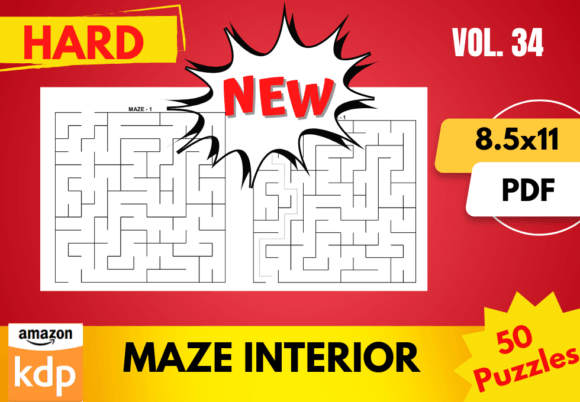
When a product description states it is "KDP Interior Ready," like the mentioned Maze Puzzle 15 Puzzles with Solutions KDP Interior Ready for printing, it signifies a key technical and business advantage. This means the digital file (typically a PDF) is formatted precisely to Amazon KDP's specifications for paperback books. For the 8.5×11 inch size, this includes correct margins, bleed settings (if needed), and a layout that ensures every puzzle prints perfectly on each page.
This readiness is crucial for two main groups: end-users who purchase the book for fun, and KDP publishers who might use the interior as a template or complete product to publish under their own title. For publishers, it saves hours of design work and technical troubleshooting. It represents a plug-and-play solution to enter the puzzle book market, emphasizing how technology streamlines creative business.
Breaking Down a Superior Puzzle Book Product
Let's examine the features of a well-crafted KDP maze puzzle book, as exemplified by the described volumes, to understand what makes it both educational and commercially viable.
Structure and User Experience: One Maze, One Solution, One Page
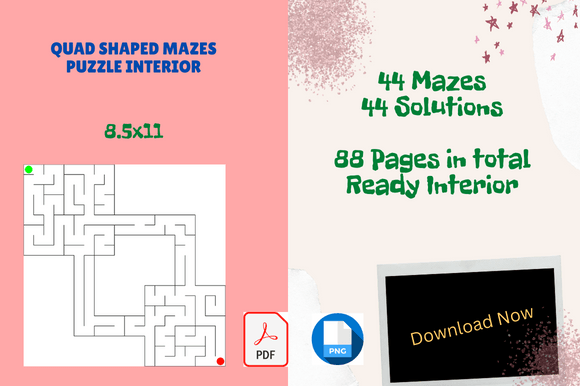
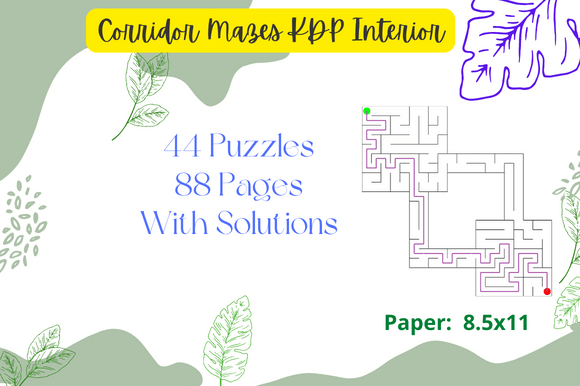
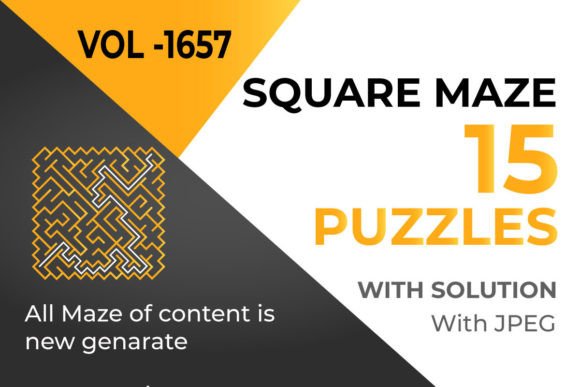
The design principle of "one maze per page, one solution included" is a thoughtful approach to user experience. It prevents clutter, gives the solver a clean, focused space to work, and makes the book easy to navigate. Including the solution on a separate page (or integrated nearby) is essential. It provides a safety net for frustration, allows for learning by comparison ("How did they solve that?"), and makes the book usable in educational settings where a teacher or parent might need the answer key. The Large Print specification is another critical accessibility feature, ensuring the puzzles are clear and easy to see for young children or anyone who prefers bigger, bold lines.
Content Integrity: Newly Generated, No Duplicates
A claim like "All Mazes of content is New Generate No Duplicate content" addresses a core value in the digital age: originality. It assures the buyer or publisher that the book offers unique puzzles, not a recycled collection from other sources. This is vital for SEO and customer satisfaction. In informational search intent, people look for "new maze puzzles" or "unique brain teasers." Fresh content fulfills that intent directly. It also builds the creator's authority (a key part of E-E-A-T—Experience, Expertise, Authoritativeness, Trustworthiness) by demonstrating they can produce novel, quality material, like the work from mdhafizulislam3612.
The Technical Foundation: Formatted and Tested PDF
The final deliverable is a PDF file, 8.5×11 inch, that is "100 formatted and tested." This is the behind-the-scenes work that makes everything possible. Formatting ensures visual consistency and print reliability. Testing is perhaps even more important—it means the creator has likely uploaded the file to KDP's previewer, checked the physical proof, or simulated printing to guarantee no lines are cut off, the solutions align correctly, and the pages are in order. This step transforms a digital art project into a reliable consumer product.
How Maze Puzzle Books Fit Into Modern Life and Business
The application of such specialized books is broader than one might initially think.
- Education & Parenting: They are excellent resources for teachers to use in classroom activity packs, for homeschooling, or for parents seeking constructive screen-free activities. The large print and solutions make them particularly user-friendly in these settings.
- Creativity & Side Businesses: For graphic designers or puzzle enthusiasts, creating KDP-ready interiors is a creative outlet that can also generate passive income. It exemplifies the "creator economy" where niche skills can be monetized.
- Gifting & Nostalgia: A physical puzzle book is a wonderful gift, tapping into nostalgia for classic pen-and-paper games while offering a tangible, interactive present.
- Cognitive Wellness: For adults, they are part of the growing "brain game" trend aimed at maintaining mental agility, similar to sudoku or crosswords, but with a distinct visual-spatial focus.
The business model around them is also instructive. By selling the interior as a "Ready for Printing" product, the creator serves two markets: the direct consumer and the entrepreneurial publisher. This leverages technology to scale the utility of a single creative work.
Building a Broader Understanding: The Ecosystem of Self-Published Content
Products like these maze puzzle books are not isolated artifacts. They are part of a vibrant ecosystem of self-published, digital-to-physical content. They highlight several key principles of today's informational and creative economy:
- Quality and Niche Focus Wins: Even in a vast marketplace, a well-executed product focusing on a specific need (e.g., large-print mazes for kids) can find its audience.
- Technical Readiness is a Selling Point: In a world where time is precious, products that are pre-vetted and ready-to-use offer immense value.
- Originality is Both Ethical and Commercial: Creating new content satisfies customers, builds trust, and aligns with search engine preferences for fresh, helpful material.
- The Blend of Analog and Digital: The core product is an analog, physical experience (solving a maze with a pen), but its creation, distribution, and marketing are entirely digital. This is a powerful model for many traditional activities.
In conclusion, maze puzzle books like Kid Square Maze Puzzle VOL-1657 and Maze Puzzle 15 Puzzles with Solutions represent far more than a simple collection of games. They are a testament to how timeless human interests—problem-solving, play, learning—can be seamlessly integrated into modern platforms like KDP. They serve educational purposes, support creative entrepreneurship, and offer a mindful respite from digital overload. By understanding the careful thought behind their design—the large print, unique content, KDP-ready formatting—one gains not just insight into a product, but into a whole approach to creating valuable, helpful content for today's diverse audiences.